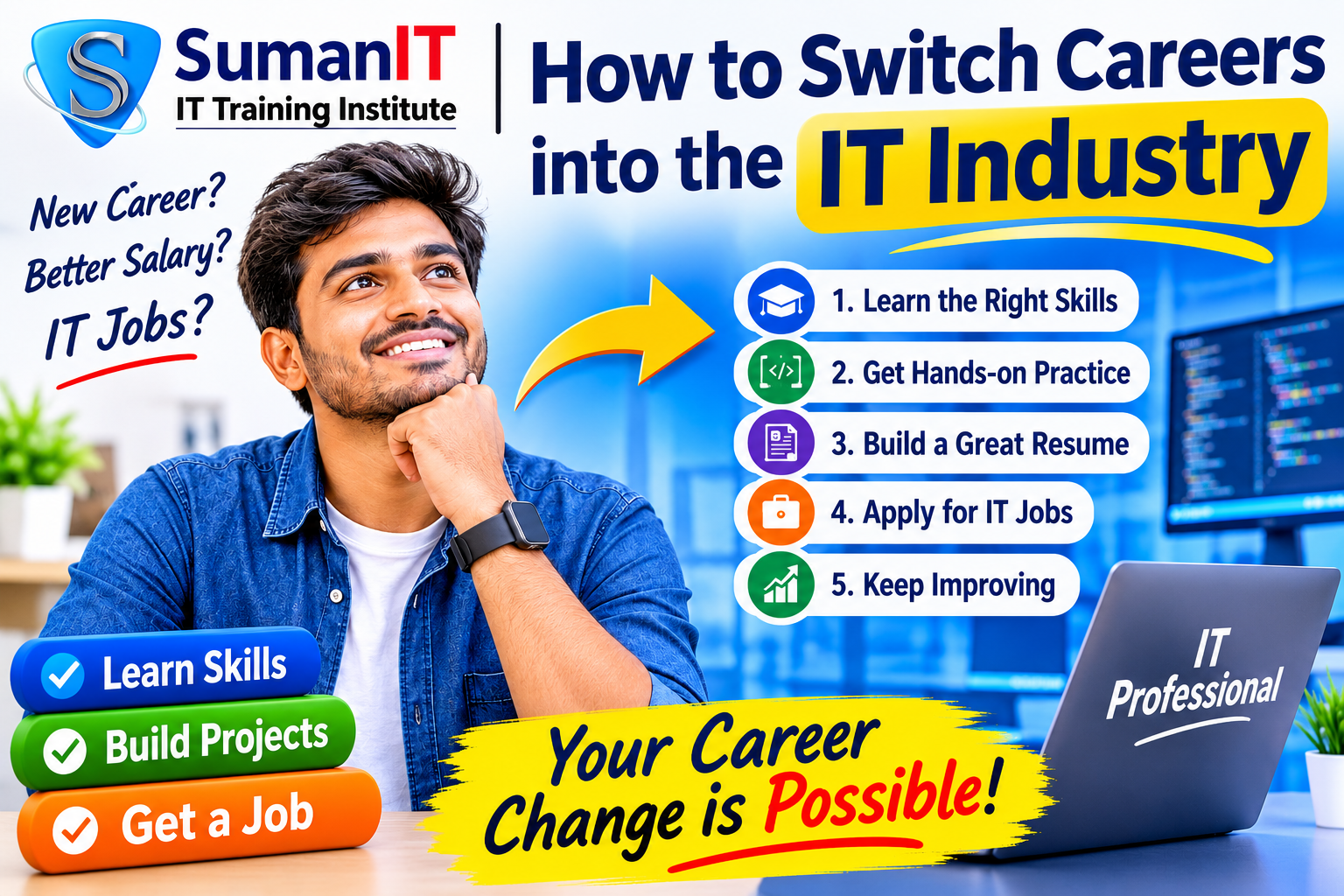
Are you planning to switch careers into the IT industry but unsure where to start? You are not alone. Many graduates and working professionals from non-technical backgrounds are exploring opportunities in information technology because of its career growth, attractive salaries, global opportunities, and continuous learning environment.
The good news is that you do not always need a computer science degree or previous IT experience to build a successful career in technology. With the right training, practical knowledge, industry-relevant skills, and consistent effort, you can transition into the IT industry.
In this guide, we will explain how to switch careers into the IT industry, which courses to consider, what skills to develop, and how professional IT training can help you become job-ready.
1. Understand Why You Want to Switch to IT
Before choosing a course, understand why you want to enter the IT industry. Technology offers several career opportunities across software development, cloud computing, data analytics, cybersecurity, software testing, and enterprise applications.
Some major reasons professionals choose IT careers include:
- Better long-term career growth.
- Opportunities to work with international companies.
- Competitive salary packages.
- Opportunities for continuous professional development.
- Multiple career paths for beginners and experienced professionals.
- Opportunities to work remotely or in hybrid environments.
Identifying your career goals will help you choose the right technology and learning path.
2. Choose the Right IT Career Path
The IT industry offers different career options depending on your interests, educational background, and learning abilities.
Here are some popular IT career paths to consider in 2026.
SAP Training
SAP is widely used by businesses to manage finance, procurement, sales, inventory, and other business operations.
Popular SAP modules include:
- SAP FICO – Financial Accounting and Controlling.
- SAP MM – Materials Management.
- SAP SD – Sales and Distribution.
- SAP ABAP – Advanced Business Application Programming.
- SAP BASIS – SAP system administration.
- SAP GRC – Governance, Risk, and Compliance.
SAP training can be a suitable option for graduates, finance professionals, business professionals, and experienced employees interested in enterprise technology.
Software Development
Software development involves creating websites, mobile applications, and business software.
Popular technologies include Java, Python, JavaScript, React, and SQL.
This career path is suitable for people interested in programming, problem-solving, and building applications.
Data Analytics and Power BI
Data analytics focuses on collecting, processing, and understanding information to support business decisions.
Important skills include Excel, SQL, Power BI, and data visualization.
This field can be a good choice for professionals who enjoy working with numbers, reports, and business information.
Cloud Computing
Cloud computing allows businesses to store data, host applications, and manage infrastructure using cloud platforms.
Popular platforms include AWS, Microsoft Azure, and Google Cloud.
Cloud-related skills are useful for people interested in infrastructure, networking, and IT operations.
Software Testing
Software testing ensures that applications work correctly and meet business requirements.
Beginners can explore manual testing, automation testing, Selenium, and API testing.
Choose a career path based on your interests rather than simply following industry trends.
3. Learn the Essential Technical Skills
Once you select your career path, focus on developing the technical skills required for entry-level positions.
For example:
- SAP professionals should understand relevant SAP modules and business processes.
- Software developers should learn programming languages, databases, and development tools.
- Data analysts should understand Excel, SQL, and Power BI.
- Cloud professionals should learn networking fundamentals and cloud platforms.
- Software testers should understand testing concepts, test cases, and defect reporting.
Start with the fundamentals and gradually move towards advanced concepts.
Avoid learning multiple technologies simultaneously. Building strong knowledge in one area is more valuable than having limited knowledge of several technologies.
4. Join a Professional IT Training Institute
Professional training can make the career transition easier, especially for beginners who need structured guidance.
A good IT training institute should provide:
- Experienced trainers with industry knowledge.
- Structured course curriculum.
- Practical exercises and assignments.
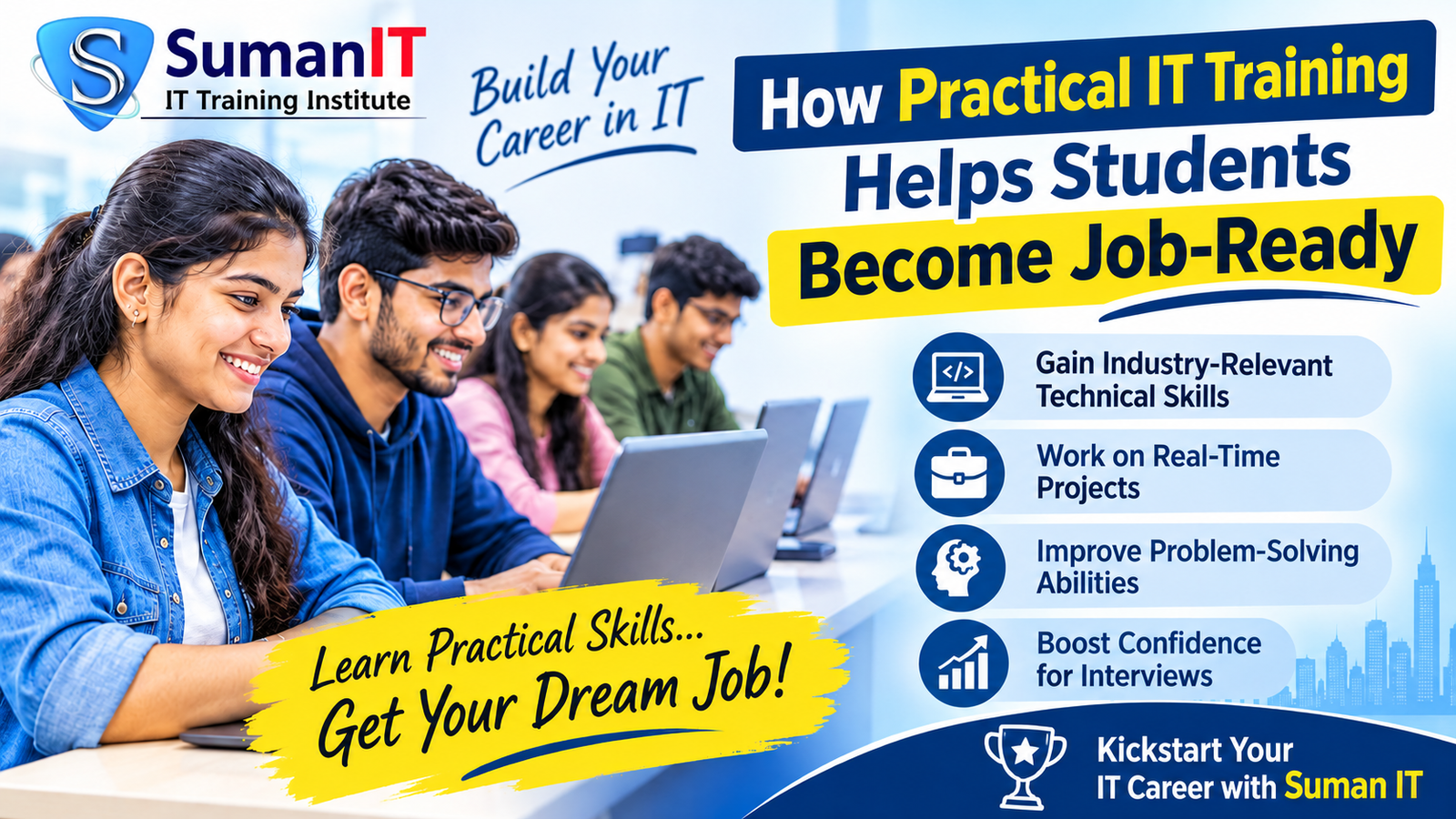
- Real-time project exposure.
- Interview preparation.
- Resume-building guidance.
- Career guidance and placement assistance, where available.
If you are looking for IT training in Hyderabad, choosing an institute that focuses on practical learning can help you understand how technologies are used in real business environments.
Suman IT offers training opportunities in various IT technologies, helping learners develop industry-relevant technical knowledge.
5. Work on Real-Time Projects
Learning theoretical concepts alone is not enough to enter the IT industry. Employers often look for candidates who can demonstrate practical knowledge.
Projects help you understand how technical concepts work in real business situations.
Examples include:
- SAP: Practice business transactions and processes using an appropriate training environment.
- Software Development: Build a portfolio website or basic business application.
- Power BI: Create interactive dashboards using sample business datasets.
- Software Testing: Prepare test cases and execute testing scenarios.
- Cloud Computing: Deploy a basic application using a cloud platform.
Document your projects and explain your contribution clearly during interviews.
6. Build a Strong IT Resume and LinkedIn Profile
Your resume is one of the most important tools when applying for your first IT position.
Even without previous IT experience, you can create a strong resume by highlighting your technical skills, certifications, projects, and transferable professional experience.
Include:
- Professional summary.
- Educational qualifications.
- Technical skills.
- Training and certifications.
- Academic or practical projects.
- Previous work experience.
- Relevant achievements.
Update your LinkedIn profile with your new skills and projects. Connect with recruiters, IT professionals, and people working in your chosen technology.
7. Prepare for IT Interviews
Interview preparation is essential when transitioning from a different career into IT.
Focus on three important areas:
Technical knowledge: Understand the concepts, tools, and technologies included in your selected course.
Practical knowledge: Be prepared to explain your training projects and demonstrate how you solved problems.
Communication skills: Practice explaining technical concepts clearly and confidently.
Research common interview questions and participate in mock interviews to improve your confidence.
Do not worry if you cannot answer every question initially. Consistent preparation will help you improve.
8. Apply for Entry-Level IT Opportunities
After developing the required skills and completing practical projects, start applying for relevant positions.
Depending on your chosen career path, consider roles such as:
- SAP Trainee.
- Junior SAP Consultant.
- Software Developer Trainee.
- Junior Data Analyst.
- Power BI Developer Trainee.
- Software Testing Engineer.
- Cloud Support Associate.
You can explore opportunities through LinkedIn, Naukri, company career pages, and professional networks.
Customize your resume for each role and focus on positions that match your actual skills and experience.
9. Common Mistakes to Avoid When Switching to IT
Many beginners make mistakes that slow down their career transition.
Avoid these common problems:
- Choosing a course without understanding the career opportunities.
- Learning too many technologies at once.
- Depending entirely on theoretical knowledge.
- Ignoring practical projects.
- Expecting a high-paying job immediately after training.
- Neglecting communication and interview skills.
- Applying for jobs without preparing a suitable resume.
Remember that switching careers requires patience, consistent practice, and realistic expectations.
Conclusion
Switching careers into the IT industry in 2026 can be a valuable step towards professional growth. Whether you are a fresher, graduate, or working professional from a non-technical background, the right learning strategy can help you build a foundation for a technology career.
Start by identifying your interests, selecting a suitable IT course, developing practical skills, working on real-time projects, and preparing for interviews.
With structured training and continuous learning, you can move closer to your goal of becoming an IT professional.
If you are planning to start your IT career, explore the training programs offered by Suman IT and take the first step towards building your future in technology.
Visit: https://sumanit.com/
Frequently Asked Questions (FAQs)
1. Can I switch to the IT industry without a computer science degree?
Yes. Many IT roles are accessible to candidates from different educational backgrounds. The required skills, practical knowledge, and qualifications depend on the specific job.
2. Which IT course is best for career changers?
SAP, software development, Power BI, data analytics, cloud computing, and software testing are popular options. The best course depends on your interests and previous experience.
3. Can a non-technical person get an IT job?
Yes. Non-technical candidates can pursue suitable IT roles by developing relevant technical skills, completing practical projects, and preparing for interviews.
4. How long does it take to switch careers into IT?
The timeline varies depending on your background, chosen technology, learning schedule, and practical experience. Consistent learning and hands-on practice are essential.
5. Is SAP a good career option for beginners?
SAP can offer career opportunities in enterprise technology. Beginners should choose a relevant SAP module, understand its business processes, and gain practical training.
6. How can I find the best IT training institute in Hyderabad?
Compare course curriculum, trainer experience, practical project opportunities, student feedback, and career support before selecting an IT training institute.