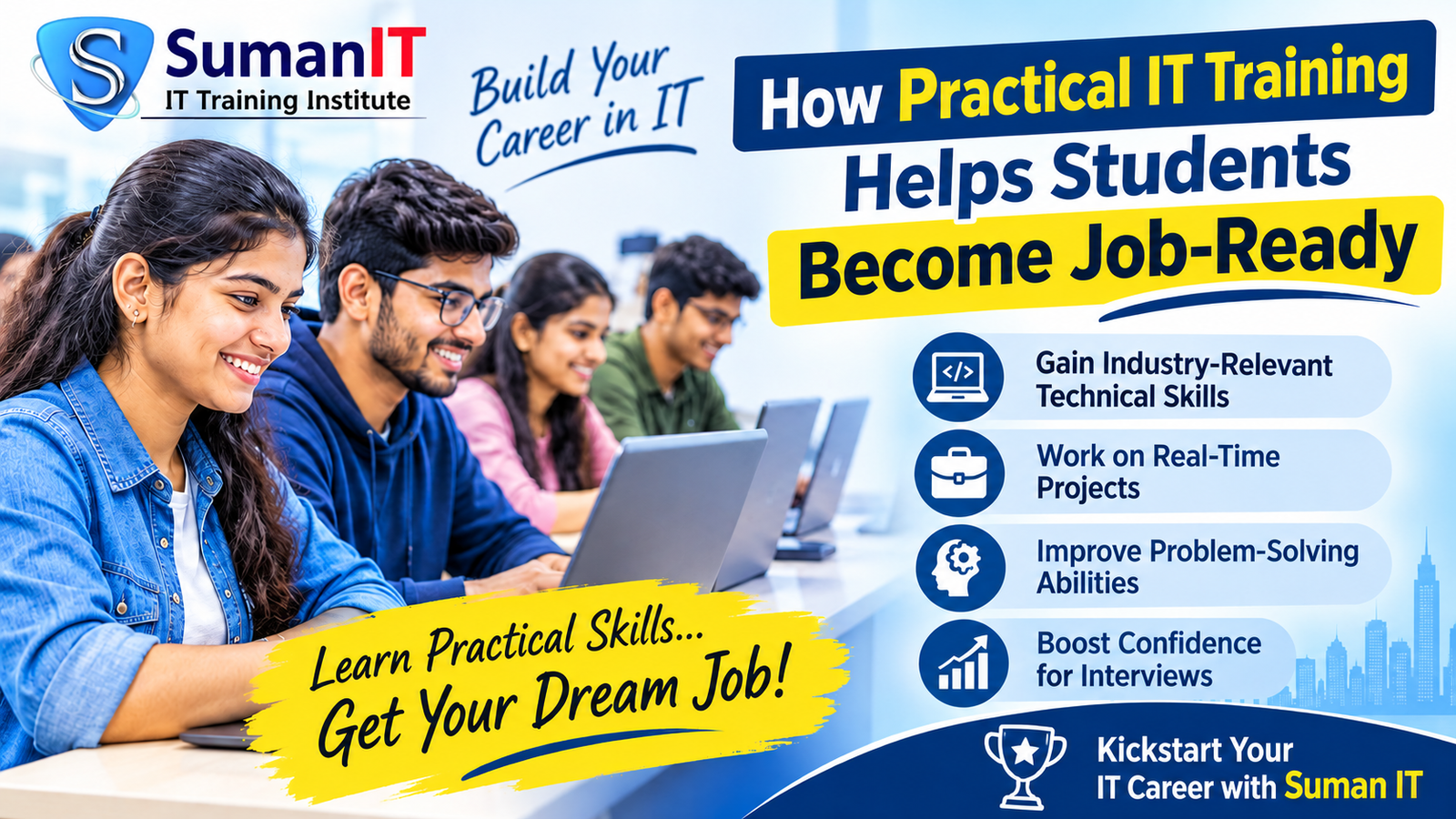
The IT industry is growing rapidly, creating exciting career opportunities for students and fresh graduates. However, getting a job in the technology sector requires more than just a college degree or theoretical knowledge. Employers look for candidates who have practical experience, technical skills, problem-solving abilities, and confidence in working on real-world projects.
This is where practical IT training plays an important role. It helps students understand how technology works in real business environments and prepares them to handle professional responsibilities. Whether students want to build a career in software development, SAP, data analytics, programming, or other IT fields, hands-on training can make a significant difference.
In this article, we explore how practical IT training helps students become job-ready and improves their chances of building a successful IT career.
1. Bridges the Gap Between Theoretical Knowledge and Industry Requirements
Many students graduate with strong theoretical knowledge but struggle to apply what they have learned in real-world situations. Academic education often focuses on concepts, definitions, and examinations, whereas IT companies expect employees to solve practical problems.
Practical IT training bridges this gap by allowing students to work with industry-relevant technologies, software tools, and applications.
For example, a student learning SAP can understand business processes through hands-on exercises. Similarly, someone learning Java or Python can develop small applications and understand how programming concepts work in actual projects.
This practical exposure helps students become familiar with workplace expectations before entering the industry.
2. Develops Industry-Relevant Technical Skills
Technology changes continuously, and companies need professionals who understand current tools, platforms, and programming languages.
Practical IT training helps students develop technical skills that match industry requirements.
Some popular IT skills include:
- SAP FICO, SAP MM, SAP SD, and SAP ABAP
- Java and Python programming
- SQL and database management
- Power BI and data analytics
- Web development and software testing
- ServiceNow and cloud technologies
By practising these technologies during training, students gain the technical foundation required for different IT job roles.
Learning through practical exercises also makes it easier to understand complex technical concepts.
3. Provides Real-Time Project Experience
Project experience is one of the most important factors employers consider when evaluating freshers.
Students who have worked on practical projects can demonstrate their ability to apply technical knowledge and complete assigned tasks.
A good IT training program should include project-based learning, where students work on assignments related to real business requirements.
For example:
- Java students can develop web-based applications.
- Python students can create automation programs.
- SAP students can practise business scenarios.
- Power BI students can build interactive dashboards.
- SQL students can create and manage databases.
These projects help students build confidence and provide practical examples to discuss during job interviews.
4. Improves Problem-Solving and Analytical Thinking
IT professionals regularly face technical challenges that require logical thinking and effective problem-solving skills.
Practical training encourages students to identify errors, analyse problems, test different solutions, and improve their technical knowledge.
For example, programming students learn how to debug code when applications do not work as expected. Data analytics students learn how to identify incorrect data and generate meaningful insights.
This experience develops independent thinking and prepares students to handle challenges in professional environments.
5. Builds Confidence for Technical Interviews
Technical interviews can be challenging for fresh graduates, especially when interviewers ask practical questions instead of theoretical ones.
Practical IT training helps students prepare for these situations by giving them opportunities to explain concepts, demonstrate technical skills, and discuss their projects.
Students can improve their interview performance through:
- Technical interview practice
- Practical coding exercises
- Project explanations
- Frequently asked interview questions
- Mock interviews
- Communication and presentation practice
When students understand how technologies work in real situations, they can answer interview questions more confidently.
6. Enhances Communication and Teamwork Skills
Technical knowledge alone is not enough to succeed in an IT career. Professionals must also communicate effectively, collaborate with colleagues, and understand project requirements.
Practical IT training can include group projects, discussions, presentations, and collaborative assignments.
These activities help students develop important workplace skills, including:
- Verbal and written communication
- Team collaboration
- Time management
- Task management
- Professional behaviour
- Presentation skills
Developing these abilities during training helps students adapt more easily to corporate environments.
7. Helps Students Understand Real IT Job Roles
Many students are unsure about which career path to choose after graduation. Practical training gives them an opportunity to explore different technologies and understand the responsibilities associated with various job roles.
For example:
| IT Training | Potential Job Roles |
|---|---|
| SAP FICO | SAP FICO Consultant |
| SAP ABAP | SAP ABAP Developer |
| Java | Java Developer |
| Python | Python Developer |
| Power BI | Power BI Developer |
| SQL | SQL Developer |
| ServiceNow | ServiceNow Administrator |
Understanding these career options helps students make better decisions based on their interests, educational backgrounds, and career goals.
8. Creates a Strong Professional Portfolio
A professional portfolio demonstrates a student’s technical capabilities to potential employers.
Practical IT training allows students to create projects, assignments, dashboards, applications, and other work samples that showcase their skills.
Students can maintain their projects on platforms such as GitHub and include relevant project descriptions in their resumes.
A strong portfolio helps candidates demonstrate what they can actually build rather than simply listing technologies they have studied.
9. Makes Students More Adaptable to Workplace Environments
Every IT company follows different development processes, tools, and working methods. Students who have practical training experience can adapt more easily to new technologies and professional responsibilities.
Exposure to project documentation, software tools, debugging, testing, and structured assignments helps students understand how professional IT teams operate.
This familiarity can reduce the learning curve when they join a company.
10. Why Choose Practical IT Training at Suman IT?
Choosing the right training institute is an important step towards building a successful IT career.
Students should look for training programs that focus on practical learning, industry-relevant technologies, project experience, and career preparation.
Suman IT provides an opportunity for aspiring IT professionals to explore technology-focused learning and develop skills for their career goals.
When selecting an IT training program, consider the following factors:
- Experienced trainers with relevant industry knowledge.
- Updated course curriculum.
- Practical assignments and project-based learning.
- Individual guidance and doubt clarification.
- Technical interview preparation.
- Career guidance and placement assistance, where offered.
The right training approach can help students strengthen their technical foundation and prepare for professional opportunities.
Conclusion
Practical IT training plays a vital role in transforming students into job-ready professionals. It connects theoretical knowledge with real-world applications, develops technical expertise, improves problem-solving abilities, and builds confidence for interviews.
For students and fresh graduates who want to enter the technology industry, learning through hands-on experience is an important investment in their future.
Whether you are interested in SAP, Java, Python, Power BI, SQL, or other IT technologies, choosing a practical learning program can help you move closer to your career goals.
Start building your IT skills today with Suman IT and take the next step towards a successful technology career.
Frequently Asked Questions (FAQs)
1. Why is practical IT training important for students?
Practical IT training helps students apply theoretical concepts, develop technical skills, work on projects, and understand real-world industry requirements.
2. Can freshers get IT jobs through practical training?
Yes. Practical training can improve a fresher’s technical knowledge, project experience, and interview confidence. However, getting a job also depends on individual skills, performance, and employer requirements.
3. Which IT courses are best for getting a job?
Popular options include SAP, Java, Python, Power BI, SQL, ServiceNow, and full-stack development. The best choice depends on your interests and career objectives.
4. Does practical IT training include real-time projects?
Many practical training programs include assignments, simulated business scenarios, and project-based exercises to help students understand how technologies are used in professional environments.
5. How can I choose the best IT training institute in Hyderabad?
Look for an institute offering an updated curriculum, practical sessions, experienced trainers, project-based learning, interview preparation, and transparent course information.